









Modernizing Energy Supply With Predictive Transformer Monitoring: Inside Joseph Kao's Journey Building Magnefy
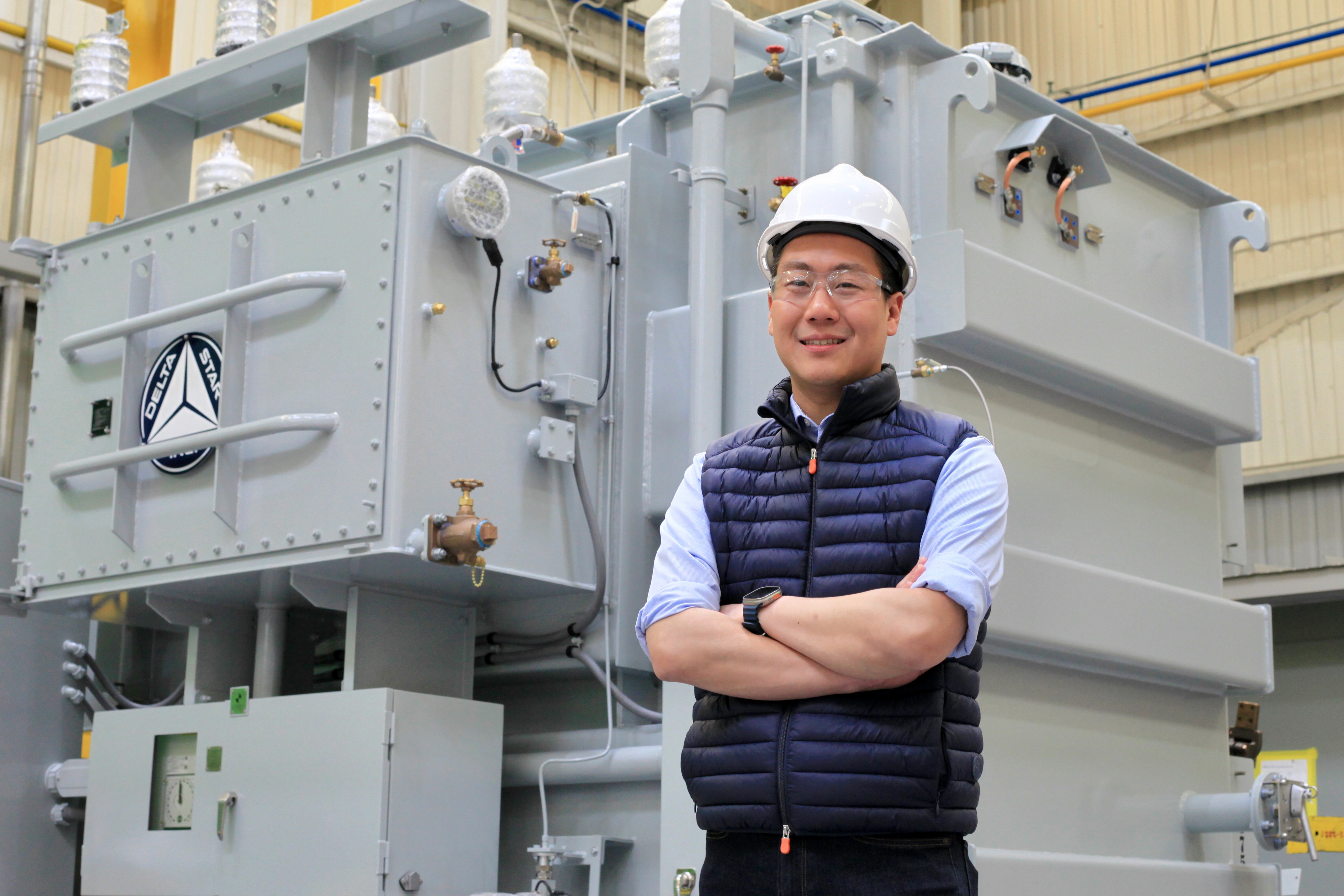
You might not think of transformers every day, but they play a critical role in our power infrastructure, helping run everything from neighborhood power grids to airports and hospitals.
But many transformers across the world are expiring past their “best by” date. They’ve been in action for decades, and are becoming the “ticking time bombs” on the utility grid. We saw the consequences of this recently—transformer failure at London Heathrow shut down the airport for an entire day, resulting in a loss of tens of millions of pounds.
Having become immersed in energy supply and power infrastructure while working at Apple and studying at Stanford Business School, material engineer Joseph Kao knew that better monitoring and efficiency would be critical to managing energy in the long run. So he set out to build Magnefy and bring AI-powered predictive monitoring to critical electrical infrastructure.
Introducing Magnefy: Predictive Monitoring for Critical Grid Infrastructure
Magnefy uses AI and electromagnetic sensing technology to detect early anomalies in transformers. This helps organizations monitor the health of their systems and prevent costly outages.
Traditionally, organizations have used Dissolved Gas Analysis (DGA) to assess transformer health, which consists of collecting oil samples and performing chemical analysis. But this approach is costly, indirect, and can’t be performed continuously, leading to incomplete monitoring. “Dissolved gas analysis requires engineers to go into the building and manually collect an oil sample from inside the transformer tank,” Joseph explains. “There are some challenges here. It's not continuous, to begin with, and it can be costly. And it's not insightful because it's indirect—it's using a chemical way to understand the electrical equipment's health.”
Magnefy, on the other hand, uses high-frequency electromagnetic sensors to assess transformer health in real time. Data is then aggregated into a sensor-agnostic, AI-powered analytics platform that allows organizations to monitor risk ranking, maintenance insights, and more.
The team is currently partnering with mission-critical facilities such as hospitals, data centers, and independent power producers, helping them analyze transformer health and prevent costly outages. Having only launched one year ago, Magnefy just raised $1.8 million in pre-seed funding and already has 3-4 paid pilots in progress.
Joseph’s Journey to Magnefy
Although Joseph came to Magnefy by way of Apple and Stanford, he grew up a world away from Silicon Valley, in Taiwan. Raised by grandparents who had escaped China during the civil war, Joseph was brought up to believe that every resource is valuable. From volunteering at neighborhood recycling plants, Joseph developed an interest in materials science, and moved to the US to study the practice at UC Berkeley, earning a PhD in Material Science with a focus on plastics.
After studying, Joseph moved into tech, first at unicorn startup Carbon and later at Facebook and Apple. During his time at Apple, Joseph was the lead engineer for the Apple Vision Pro lens module and advisor on Apple’s Zero Waste Initiative. These responsibilities led him to explore material sourcing and identify opportunities for efficiency in the organization’s supply chain. He soon recognized an insight—focusing on improving resource utilization allowed him to marry his innate belief in resourcefulness with his expertise in materials science.
Joseph decided to leave his full-time role and attend Stanford Business School with the aim of building a company related to energy and supply management. He began with a focus on battery recycling and repurposing, setting out to build a solution that would help people use retired EV/solar batteries for other storage purposes. But after experiencing go-to-market challenges, a customer discovery call led to a vital pivot—renewable energy and utilities kept experiencing transformer failures, but had no tools for predictive monitoring.
So Joseph transitioned to build what is now Magnefy, aiming to maximize resource utilization through optimizing transformer lifetimes. In the long run, Joseph aspires for Magnefy to become the single source of truth for critical electrical equipment health, expanding beyond transformers to switchgear, UPS systems, batteries, generators, with the ultimate goals of minimizing power outages, maximizing renewable energy delivery, and promoting energy equity in the developing world.
Joseph’s Advice for Fellow Founders
As a solo founder, Joseph has had to navigate the ups-and-downs of his founder journey on his own. He emphasizes that it’s important for solo founders to believe in themselves—”As solo founders, we’re more powerful than we think,” he explains. “Believing that your vision and mission really matter really gives you strength."
At the same time, he encourages founders to ask for help when they need it, especially if they’re solo. “Finding the right advisor early on can really help. In addition to your own belief, having an advisor that believes in you, who knows the industry and can be your sounding board, is so helpful."
To learn more about Joseph’s journey, you can follow him on LinkedIn and visit magnefy.com/
Up to 3,500 bonus and 3% cash-back on all card spend [3], 6 months off payroll, and 50% off bookkeeping for 6 months, free R&D credit.
Frequently Asked Questions
- How do I sign up for Every?
You can get started right away—just click “Get Started” and follow a short onboarding flow. Prefer a little help? One of our specialists can walk you through incorporation, banking, payroll, accounting, or whatever you need.
- What features does Every offer?
Every gives startups a complete back office in one platform. From incorporation and banking to payroll, bookkeeping, and tax filings, we take care of the operational heavy lifting—so you can spend more time building, less time managing.
- How is Every different from other tools?
Most competitors give you software. Every gives you a full-stack finance and HR team—plus smart financial tools that actually benefit founders. Earn up to 4.3% interest on idle cash and get cash back on every purchase made with your Every debit cards, routed straight back to you.
Every is not a bank. Banking services provided by Thread Bank, Member FDIC. Your deposits qualify for up to $3,000,000 in FDIC insurance coverage when Thread Bank places them at program banks in its deposit sweep program. Pass-through insurance coverage is subject to conditions. The Every Visa Business Debit Card is issued by Thread Bank, Member FDIC, pursuant to a license from Visa U.S.A. Inc. and may be used anywhere Visa cards are accepted.
- Is my data secure with Every?
We use end-to-end encryption, SOC 2-compliant infrastructure, and rigorous access controls to ensure your data is safe. Security isn’t a feature—it’s foundational.
Can I switch to Every if my company is already set up?Yes—you can switch to Every at any time, even if your company is already incorporated and running. Whether you're using separate tools for banking, payroll, bookkeeping, or taxes, we’ll help you bring everything into one place. Our onboarding specialists will guide you through the process, make sure your data is transferred cleanly, and get you set up quickly—without disrupting your operations. Most founders are fully transitioned within a week.
- What stage of startup is Every best for?
Every is designed for startups from day zero through Series A and beyond. Whether you're just incorporating or already running payroll and managing expenses, we meet you where you are. Early-stage founders use Every to get up and running fast—with banking, payroll, bookkeeping, and taxes all handled from day one. Growing teams love how Every scales with them, replacing patchwork tools and manual work with a clean, unified system.
We’re especially valuable for teams who want to move fast without hiring a full finance or HR team—giving founders more time to build, and fewer distractions from admin and compliance
- How long does onboarding take?
Onboarding with Every is fast and efficient. For most startups, the process typically takes between 3 to 7 days, depending on your specific needs and how much setup you already have in place.
If you're a new company, you'll be up and running quickly—getting your banking, payroll, and bookkeeping set up without hassle. If you’re transitioning from another system, our specialists will help you migrate your data, ensuring a smooth switch with no gaps or errors in your operations.
We guide you every step of the way, from incorporation to setting up automated payroll to handling your taxes—so you can focus on growing your business. Our goal is to make sure you're fully operational and confident in your back office in under a week.
Practical Questions to Ask to Ensure Your Bank is Well Managed
How much liquidity does the bank have on hand to cover unexpected withdrawals or shortfalls?
What percentage of the bank's deposits are invested in longer-term securities and loans, and what percentage is kept as cash reserves?
How does the bank diversify its investment portfolio to minimize potential losses and reduce risks?