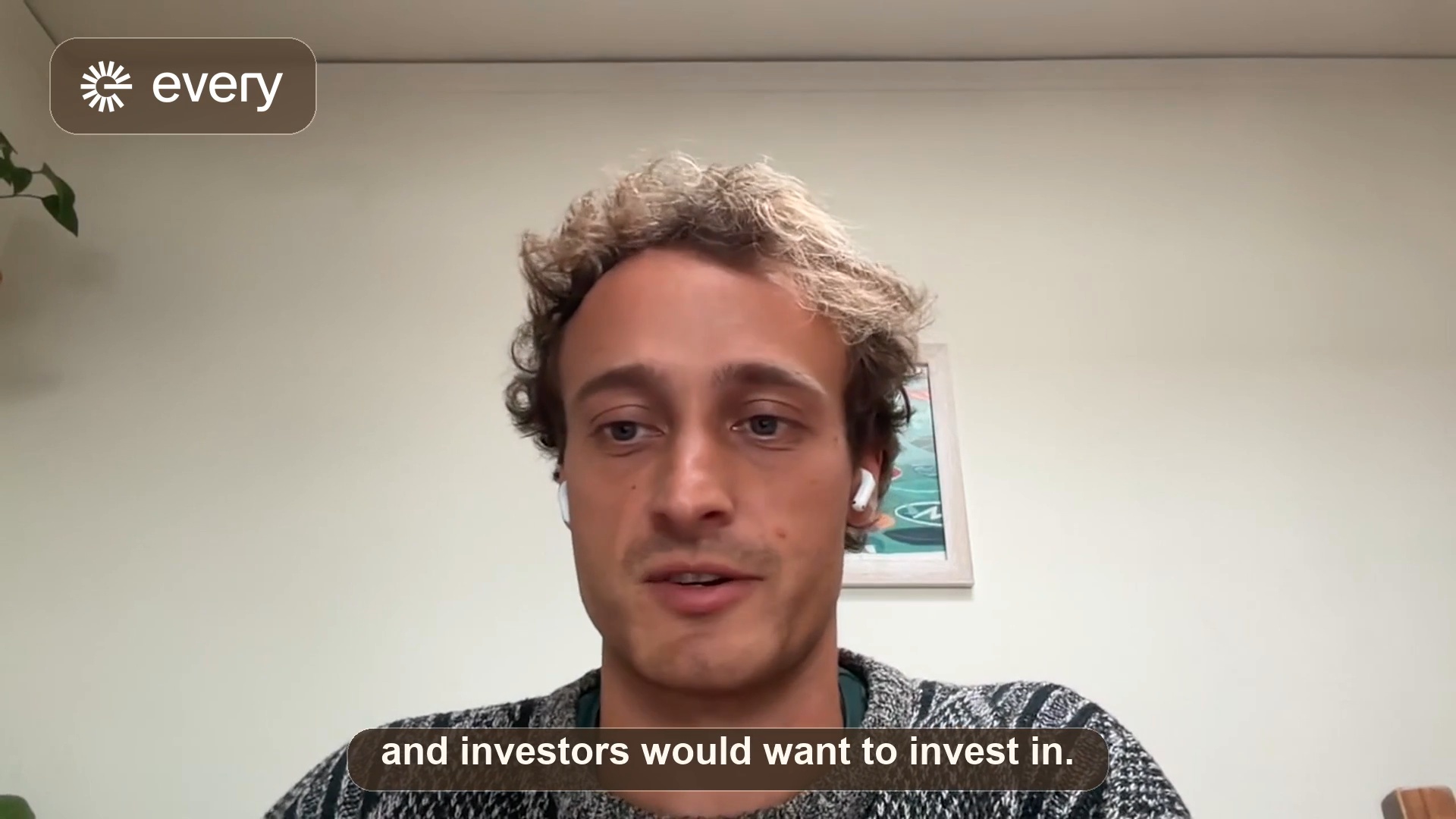









Why Looski founder Kevin Loo chose Every to incorporate his startup
Key takeaways
- Kevin Loo started Looski to help companies in compliance-heavy industries run AI on infrastructure they control. The idea grew out of a conversation with someone running a medical company who felt that model restrictions and retirements were making it harder to rely on AI in her own business.
- When Kevin set up Looski, he needed to incorporate, open a bank account, and buy hardware to test.
- What stood out about Every was how quickly he could move from getting funded to using a card for those purchases.
Why did you choose Every?
Kevin Loo: Yeah, one of the reasons I chose Every is that it's just a very integrated experience. I get to have have deposit go right into banking and then be able to expense it on a card. I was I walked out of Microsoft with a lot of hardware that I needed to test pretty much all within the same week. And that that was important to me.
What alternatives did you consider?
Kevin Loo: I've incorporated most of my companies through Incfile. I just am not a fan of with how much they're pushing other products to you and Yeah, just just not a fan of those overall experience. With Every were just much smoother and I think Incorporation as as a wedge into a founder's journey i is a great way to do it. That it's well done there.
How did incorporation go?
Kevin Loo: It's great. I just sent in the application and I think a couple of days later I got the EIN couple of days later the bank got approved. And I was in talks with Raising from a V C and like pretty much as I closed that round, banking got approved.
What other Every products do you expect to use?
Kevin Loo: Yeah, banking right away I needed it. bookkeeping payroll not of yet. Majority of my purchases are just going to hardware for me to test and I don't plan to draw a wage. but as I as I need to hire, as I finish my next round, that that that will become a need.
Tell us about Looski.
Kevin Loo: So there are a lot of restri constraints on the adoption of these compliance first companies. And essentially what Looski does is it helps companies either host their own own AI in in private cloud or host them directly on premise.
Up to 3,500 bonus and 3% cash-back on all card spend [3], 6 months off payroll, and 50% off bookkeeping for 6 months, free R&D credit.
Frequently Asked Questions
- How do I sign up for Every?
You can get started right away—just click “Get Started” and follow a short onboarding flow. Prefer a little help? One of our specialists can walk you through incorporation, banking, payroll, accounting, or whatever you need.
- What features does Every offer?
Every gives startups a complete back office in one platform. From incorporation and banking to payroll, bookkeeping, and tax filings, we take care of the operational heavy lifting—so you can spend more time building, less time managing.
- How is Every different from other tools?
Most competitors give you software. Every gives you a full-stack finance and HR team—plus smart financial tools that actually benefit founders. Earn up to 4.3% interest on idle cash and get cash back on every purchase made with your Every debit cards, routed straight back to you.
Every is not a bank. Banking services provided by Thread Bank, Member FDIC. Your deposits qualify for up to $3,000,000 in FDIC insurance coverage when Thread Bank places them at program banks in its deposit sweep program. Pass-through insurance coverage is subject to conditions. The Every Visa Business Debit Card is issued by Thread Bank, Member FDIC, pursuant to a license from Visa U.S.A. Inc. and may be used anywhere Visa cards are accepted.
- Is my data secure with Every?
We use end-to-end encryption, SOC 2-compliant infrastructure, and rigorous access controls to ensure your data is safe. Security isn’t a feature—it’s foundational.
Can I switch to Every if my company is already set up?Yes—you can switch to Every at any time, even if your company is already incorporated and running. Whether you're using separate tools for banking, payroll, bookkeeping, or taxes, we’ll help you bring everything into one place. Our onboarding specialists will guide you through the process, make sure your data is transferred cleanly, and get you set up quickly—without disrupting your operations. Most founders are fully transitioned within a week.
- What stage of startup is Every best for?
Every is designed for startups from day zero through Series A and beyond. Whether you're just incorporating or already running payroll and managing expenses, we meet you where you are. Early-stage founders use Every to get up and running fast—with banking, payroll, bookkeeping, and taxes all handled from day one. Growing teams love how Every scales with them, replacing patchwork tools and manual work with a clean, unified system.
We’re especially valuable for teams who want to move fast without hiring a full finance or HR team—giving founders more time to build, and fewer distractions from admin and compliance
- How long does onboarding take?
Onboarding with Every is fast and efficient. For most startups, the process typically takes between 3 to 7 days, depending on your specific needs and how much setup you already have in place.
If you're a new company, you'll be up and running quickly—getting your banking, payroll, and bookkeeping set up without hassle. If you’re transitioning from another system, our specialists will help you migrate your data, ensuring a smooth switch with no gaps or errors in your operations.
We guide you every step of the way, from incorporation to setting up automated payroll to handling your taxes—so you can focus on growing your business. Our goal is to make sure you're fully operational and confident in your back office in under a week.
Practical Questions to Ask to Ensure Your Bank is Well Managed
How much liquidity does the bank have on hand to cover unexpected withdrawals or shortfalls?
What percentage of the bank's deposits are invested in longer-term securities and loans, and what percentage is kept as cash reserves?
How does the bank diversify its investment portfolio to minimize potential losses and reduce risks?