








Inside NEUUF's Mission to Transform Mobility with Net-Positive Energy Technology

When broken down to first principles, most vehicles have an energy efficiency problem. Every vibration, shock, and bump absorbed by a vehicle’s suspension wastes energy, discarding it as heat.
The industry’s answer has been to add more energy, but bigger batteries mean more weight, more cost, and more redesign. While regenerative braking has become standardized, suspension energy is still being left on the table. Finding a way to capture it could fundamentally change the way we think about powering motion.
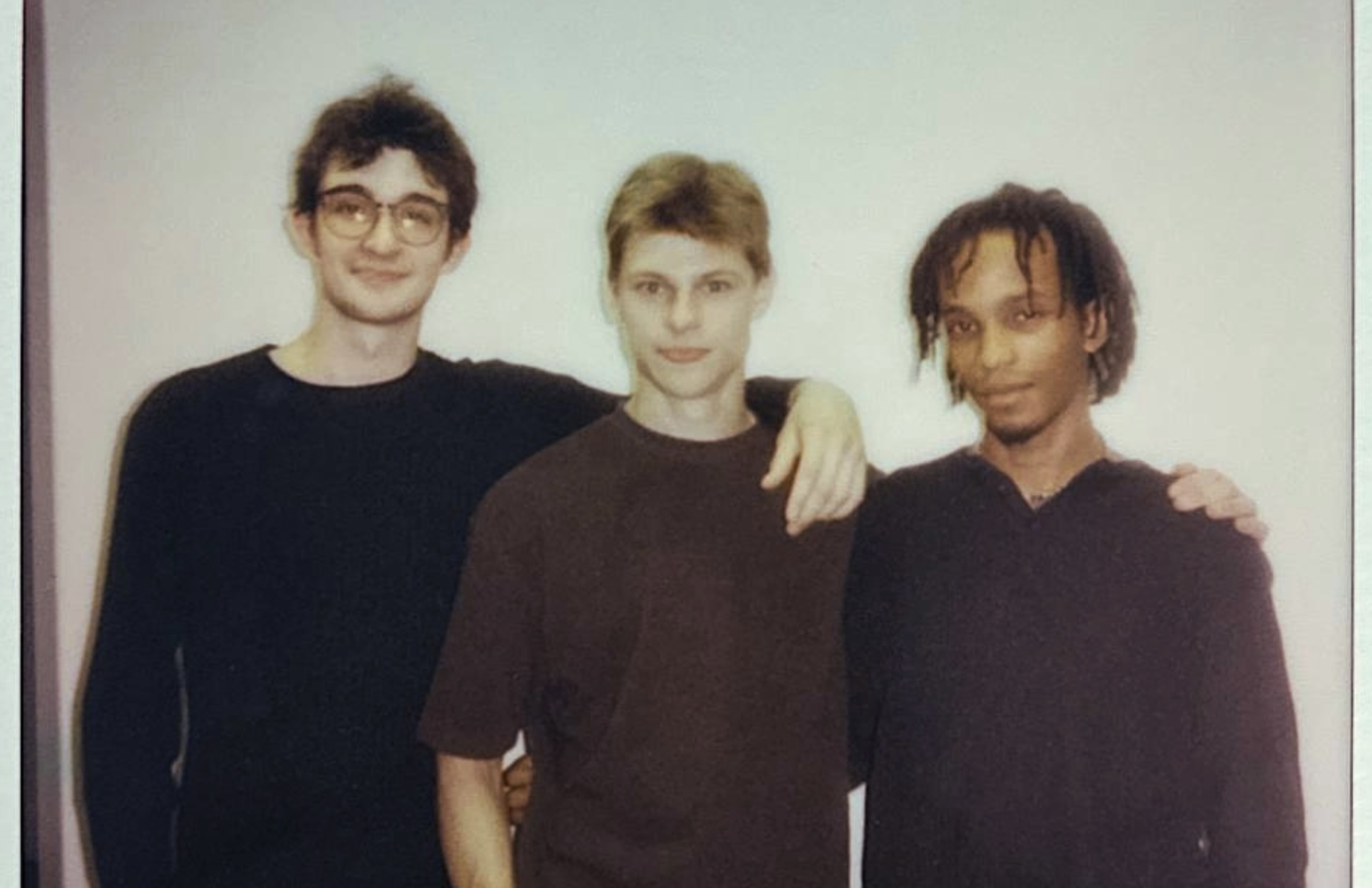
Nicholas DeGrange first recognized this challenge and designed a potential solution while in college. Now, ten years later, he’s teamed up with co-founders Caroline Tiglao and Aaron Kohn to build NEUUF and turn the vision of net-positive energy technology for mobility into reality.
Introducing NEUUF: Giving Power Back to Motion
NEUUF is a non-invasive renewables company building modules that enable vehicles to generate energy that is otherwise wasted.
Most attempts to improve range have proved too heavy or complex to implement. Swappable batteries increase range but add cost and infrastructure dependencies. Bolt-on rotary motors recover kinetic energy otherwise lost but have been too expensive and heavy to implement at scale.
NEUUF is taking a different approach. The company is building the Dunamis core, a cylindrical module, ranging from the size of a boba straw to the size of a coffee cup, that replaces the internals of an existing shock, coilover, or suspension unit and converts otherwise-wasted kinetic motion into electricity. The energy created charges the battery while the vehicle is in operation, increasing range and/or providing self-powered active dampening. The module weighs about the same as the components it replaces and requires minimal changes to tooling, assembly lines, or vehicle architecture.
The core is built primarily for two-wheel and e-motorcycle companies, fleet operators seeking resilience and lower total cost of ownership, OEMs seeking differentiation, and innovators across automotive and semi-truck applications. In NEUUF’s first pilot, with premium e-motorcycle manufacturer Monday Motorbikes, the core produced a range extension of 19–36%, depending on road and riding conditions.
Having reached TRL 7 (Technology Readiness Level 7), meaning the prototype has been validated live on a vehicle on the road rather than only in lab conditions, the team is now focused on production integration with its first commercial client.
Nicholas, Caroline, and Aaron’s Journey to NEUUF
Nicholas designed the prototype for what would later become the Dunamis core when in college. He’d had the opportunity to work in the robotics sector in Singapore and travel through Indonesia while working, where he saw first-hand how hard it was to get renewables into emerging markets. He began to explore what modular, non-invasive energy solutions could look like. After graduating, Nicholas’s interests carried him into opportunities across an array of industries both entrepreneurial and corporate alike, including the early stages of blockchain and tokenization of assets, which led him to put the project on pause.
It wasn’t until ten years later, when Nicholas met Caroline, that the concept of modular energy solutions came back to the forefront. Caroline had spent nearly two decades building and leading across consumer technology, mobility and fintech in global markets, while also growing a marketing venture of her own. After taking 18 months away from work following the birth of her first child, she returned with a clear ambition to build in technology. The two first worked together in financial services, each developing an independent practice within a larger institution. When Nicholas learned that Caroline was looking for the right opportunity, he told her about the energy-recovery idea he had carried with him since college. He showed her the prototype, which he still had in the back of his car, and an initial deck that set out the vision behind the technology. Caroline immediately saw what it could become, and the conversation quickly turned from the idea itself to how they could make it real. She joined Nicholas as co-founder, shaping NEUUF’s identity and voice from the beginning.
Just three weeks later, Aaron, whom Nicholas had met through Lunchclub, joined the company. Aaron had built his career at the early, uncertain stage of businesses, launching new products, growing audiences and revenue, and turning unfinished ideas into operating businesses. Across leadership roles at AOL, NBCUniversal, Mattel, National Geographic and a number of startups, he had led initiatives with more than $100 million in commercial impact.
NEUUF offered Aaron the kind of challenge he knew well: the chance to build from the ground up. But it also offered something larger. As a father, and through work that had deepened his sense of environmental stewardship, he saw the future of mobility as part of a broader responsibility to care for the planet and respect the environment people live in. He was drawn to the chance to help build something that could contribute to a more sustainable future, creating less harm and greater possibility for the generations that follow. He joined as Chief Business Officer to build NEUUF’s commercial path and partnerships from the beginning.
With the Dunamis core in pre-commercial production, the team is currently focused on raising a $2M seed round.
Advice for Fellow Founders
Since launching NEUUF, Nicholas, Caroline, and Aaron have learned that fostering a strong team relationship is just as important as building an innovative product. “Don’t build something with people you can’t break bread with,” Nicholas believes, and the team has designed the company’s operating system to support it. Monday meetings are called Base Camp, as every week the team knows it's about to climb a mountain and has to look out for each other. The end-of-week call is Kitchen Table, held at lunch on Friday so everyone can eat while counting the week's wins and losses.
Caroline emphasizes that everyone has to bring something to the table. On a small team with no surplus, all need to contribute. When everyone is involved, the wins are more enjoyable and the losses more bearable.
To learn more about NEUUF’s journey, you can follow Nicholas on LinkedIn, follow Caroline on LinkedIn, follow Aaron on LinkedIn, or visit www.neuuf.com.
Up to 3,500 bonus and 3% cash-back on all card spend [3], 6 months off payroll, and 50% off bookkeeping for 6 months, free R&D credit.
Frequently Asked Questions
- How do I sign up for Every?
You can get started right away—just click “Get Started” and follow a short onboarding flow. Prefer a little help? One of our specialists can walk you through incorporation, banking, payroll, accounting, or whatever you need.
- What features does Every offer?
Every gives startups a complete back office in one platform. From incorporation and banking to payroll, bookkeeping, and tax filings, we take care of the operational heavy lifting—so you can spend more time building, less time managing.
- How is Every different from other tools?
Most competitors give you software. Every gives you a full-stack finance and HR team—plus smart financial tools that actually benefit founders. Earn up to 4.3% interest on idle cash and get cash back on every purchase made with your Every debit cards, routed straight back to you.
Every is not a bank. Banking services provided by Thread Bank, Member FDIC. Your deposits qualify for up to $3,000,000 in FDIC insurance coverage when Thread Bank places them at program banks in its deposit sweep program. Pass-through insurance coverage is subject to conditions. The Every Visa Business Debit Card is issued by Thread Bank, Member FDIC, pursuant to a license from Visa U.S.A. Inc. and may be used anywhere Visa cards are accepted.
- Is my data secure with Every?
We use end-to-end encryption, SOC 2-compliant infrastructure, and rigorous access controls to ensure your data is safe. Security isn’t a feature—it’s foundational.
Can I switch to Every if my company is already set up?Yes—you can switch to Every at any time, even if your company is already incorporated and running. Whether you're using separate tools for banking, payroll, bookkeeping, or taxes, we’ll help you bring everything into one place. Our onboarding specialists will guide you through the process, make sure your data is transferred cleanly, and get you set up quickly—without disrupting your operations. Most founders are fully transitioned within a week.
- What stage of startup is Every best for?
Every is designed for startups from day zero through Series A and beyond. Whether you're just incorporating or already running payroll and managing expenses, we meet you where you are. Early-stage founders use Every to get up and running fast—with banking, payroll, bookkeeping, and taxes all handled from day one. Growing teams love how Every scales with them, replacing patchwork tools and manual work with a clean, unified system.
We’re especially valuable for teams who want to move fast without hiring a full finance or HR team—giving founders more time to build, and fewer distractions from admin and compliance
- How long does onboarding take?
Onboarding with Every is fast and efficient. For most startups, the process typically takes between 3 to 7 days, depending on your specific needs and how much setup you already have in place.
If you're a new company, you'll be up and running quickly—getting your banking, payroll, and bookkeeping set up without hassle. If you’re transitioning from another system, our specialists will help you migrate your data, ensuring a smooth switch with no gaps or errors in your operations.
We guide you every step of the way, from incorporation to setting up automated payroll to handling your taxes—so you can focus on growing your business. Our goal is to make sure you're fully operational and confident in your back office in under a week.
Practical Questions to Ask to Ensure Your Bank is Well Managed
How much liquidity does the bank have on hand to cover unexpected withdrawals or shortfalls?
What percentage of the bank's deposits are invested in longer-term securities and loans, and what percentage is kept as cash reserves?
How does the bank diversify its investment portfolio to minimize potential losses and reduce risks?