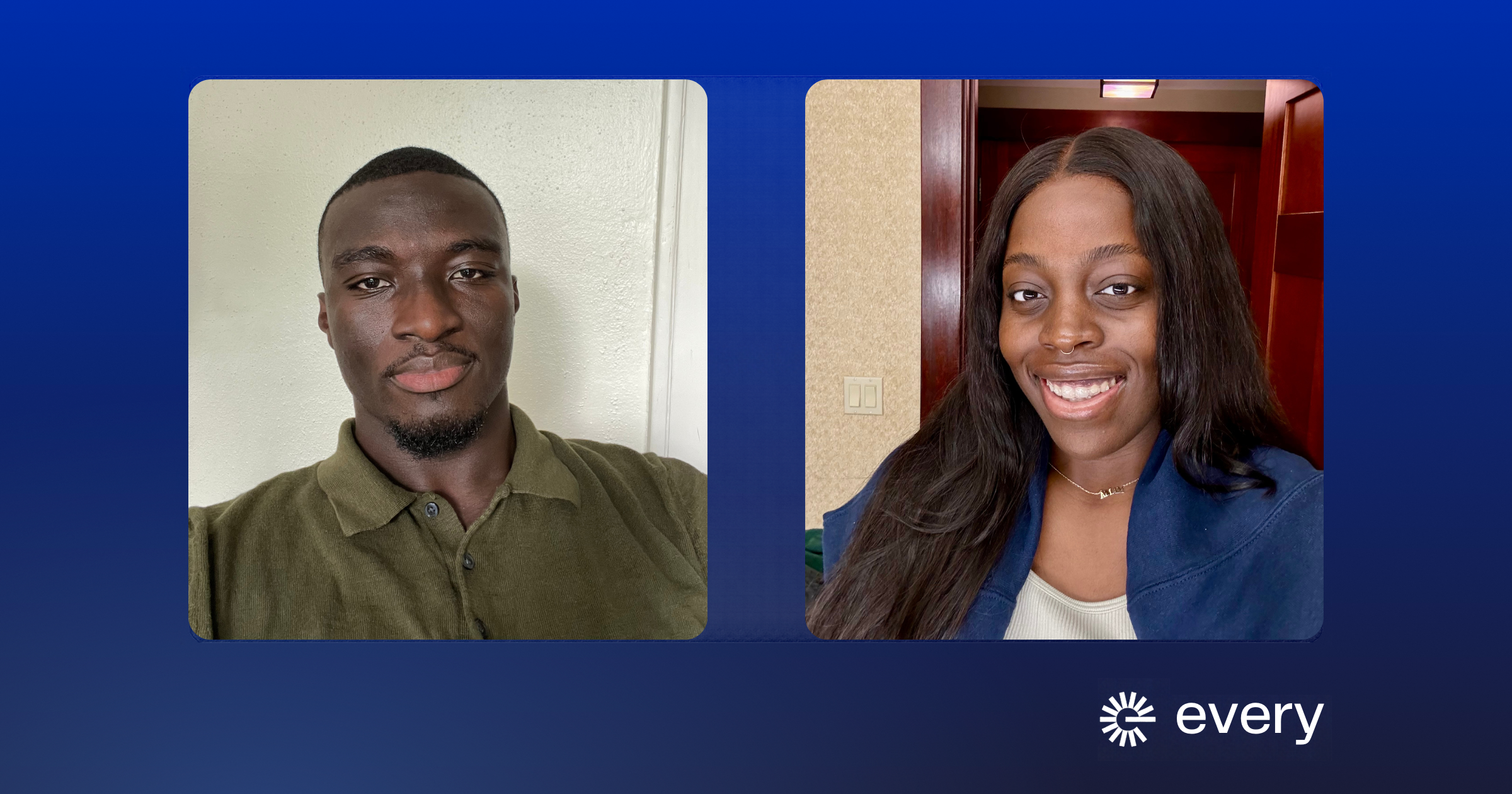










Beyond Wearables: How Ironmind.ai Is Building Continuous Health Intelligence

Consumer wearables have become increasingly common, with devices like WHOOP, Oura, Garmin, and Apple Watch making it easier than ever to track heart rate, sleep, activity, and recovery.
Yet despite the growing availability of health data, a fundamental challenge remains: health changes continuously, but healthcare still happens episodically.
Between appointments, clinicians and wellness professionals often have limited visibility into how individuals are sleeping, recovering, managing stress, or responding to treatment.
For Jonathan Wan, CEO and Co-Founder of Ironmind.ai, this disconnect represents an opportunity to rethink how wearable technology can support healthcare and wellness organizations.
Drawing on his experience in connected devices, digital payments, and enterprise technology at companies including Visa and Wells Fargo, Jonathan recognized that the next opportunity wasn’t simply collecting more health data—it was transforming that data into meaningful intelligence that could help organizations make better decisions.
That vision became Ironmind.ai.
Introducing Ironmind.ai: Continuous Health Intelligence Between Visits
Ironmind.ai is an AI-powered, device-agnostic health intelligence platform that transforms continuous biometric, behavioral, and contextual data into actionable insights for healthcare and wellness organizations.
Through its proprietary GritOS platform, Ironmind.ai integrates information from wearable ecosystems.
Rather than relying on isolated measurements, the platform combines physiological, behavioral, and contextual signals to establish personalized baselines, identify meaningful changes over time, and deliver AI-powered insights that support individuals and care teams.
What makes Ironmind.ai different is its ability to translate those insights into intelligence at three levels: individuals, care teams, and organizations.
For individuals, Ironmind.ai provides greater awareness of personal health trends and recovery.
For clinicians and wellness professionals, the platform offers additional context between visits, helping identify meaningful changes and prioritize attention.
For organizations, Ironmind.ai delivers population-level intelligence to help care teams identify trends, prioritize interventions, and support more personalized care at scale.
“Healthcare sees patients during appointments, but health changes every day. Wearables give us continuous data, and AI gives us an opportunity to turn that data into meaningful insights,” Jonathan explains. “Our goal is to help care teams understand what’s happening between visits and support better decisions.”
From Sports Performance to Healthcare and Wellness
Ironmind.ai’s early development focused on sports performance and mental readiness, where understanding stress, recovery, and physiological readiness can influence training and performance decisions.
Today, the same underlying technology is being applied across healthcare, behavioral health, rehabilitation, healthy aging, and wellness.
The company has established relationships with organizations including California Healing Centers, Redefined Wellness & Treatment, Peak Sports Psychiatry, and 4U Inclusive Fitness.
Ironmind.ai is also collaborating on research initiatives with UCSF to explore wearable technology in cognitive aging and brain health, and with California Baptist University to investigate the relationship between physiological signals, stress, recovery, and women’s athlete health.
Its work with the NFL Alumni Association further demonstrates how continuous physiological monitoring can support health awareness and engagement beyond an athlete’s playing career.
Across these applications, the underlying challenge is similar: healthcare and wellness professionals need better ways to understand meaningful health changes over time, rather than relying solely on occasional assessments or self-reported information.
Ironmind.ai’s long-term vision is to become the intelligence layer connecting continuous health data with personalized care and organizational decision-making.
Jonathan’s Journey to Ironmind.ai
For Jonathan, the inspiration behind Ironmind.ai began decades before wearable technology became mainstream.
At 18, shortly after moving from Hong Kong to San Francisco, Jonathan nearly drowned while swimming near Ocean Beach. Pulled underwater by a powerful current, he lost consciousness before being rescued by a nearby surfer.
Although his physical recovery was relatively quick, the psychological impact lasted much longer.
He avoided swimming for nearly two decades.
Nearly two decades later, Jonathan overcame his fear of open-water swimming and went on to complete 13 Ironman triathlons and twice compete in the iconic Escape from Alcatraz Triathlon.
Through his endurance journey, he developed a deeper appreciation for the complex relationship between physical health, psychological resilience, and recovery.
He also recognized a gap in the technology available to understand those relationships.
Wearable devices could measure heart rate, activity, and sleep, but these signals were rarely connected with behavioral information, personal circumstances, or broader health context.
That realization helped shape the vision for Ironmind.ai.
Jonathan teamed up with Michael Cornelio, an experienced technology executive who spent decades at Lockheed Martin developing mission-critical systems, to build a platform capable of connecting fragmented health data and transforming it into actionable intelligence.
While Ironmind.ai’s origins were rooted in sports and mental readiness, its mission has expanded to address a much broader healthcare challenge: helping individuals and organizations better understand health between traditional points of care.
Bringing Continuous Health Intelligence Into Everyday Care
Ironmind.ai’s approach begins with healthcare and wellness providers, where continuous monitoring can help care teams better understand their patients and members between visits.
Through focused deployments, the company works with providers to evaluate engagement, identify meaningful health trends, and integrate insights into existing workflows.
As these programs demonstrate value, Ironmind.ai aims to expand across departments, locations, and larger healthcare networks—bringing continuous health intelligence to more people and care teams.
This approach allows Ironmind.ai to develop its technology alongside real-world customers while building toward broader applications in remote monitoring, healthy aging, behavioral health, and enterprise healthcare.
Jonathan’s Advice for Fellow Founders
Building a healthcare technology company requires more than developing an innovative product.
Jonathan emphasizes that founders must consider operational readiness, data privacy, regulatory requirements, and long-term scalability from the beginning.
“Most founders focus entirely on product and pipeline, and administrative work gets deprioritized until it lands unexpectedly and consumes resources on someone else’s timeline,” Jonathan explains.
“Understand your non-negotiables—incorporation, HIPAA, SOC 2, jurisdiction-specific requirements—up front, and build them into your product requirements rather than retrofitting them.”
For Jonathan, the broader lesson is that building a sustainable technology company requires balancing innovation with the infrastructure needed to support real-world adoption.
To learn more about Jonathan’s founder journey and Ironmind.ai, connect with him on LinkedIn or visit Ironmind.ai.
Up to 3,500 bonus and 3% cash-back on all card spend [3], 6 months off payroll, and 50% off bookkeeping for 6 months, free R&D credit.
Frequently Asked Questions
- How do I sign up for Every?
You can get started right away—just click “Get Started” and follow a short onboarding flow. Prefer a little help? One of our specialists can walk you through incorporation, banking, payroll, accounting, or whatever you need.
- What features does Every offer?
Every gives startups a complete back office in one platform. From incorporation and banking to payroll, bookkeeping, and tax filings, we take care of the operational heavy lifting—so you can spend more time building, less time managing.
- How is Every different from other tools?
Most competitors give you software. Every gives you a full-stack finance and HR team—plus smart financial tools that actually benefit founders. Earn up to 4.3% interest on idle cash and get cash back on every purchase made with your Every debit cards, routed straight back to you.
Every is not a bank. Banking services provided by Thread Bank, Member FDIC. Your deposits qualify for up to $3,000,000 in FDIC insurance coverage when Thread Bank places them at program banks in its deposit sweep program. Pass-through insurance coverage is subject to conditions. The Every Visa Business Debit Card is issued by Thread Bank, Member FDIC, pursuant to a license from Visa U.S.A. Inc. and may be used anywhere Visa cards are accepted.
- Is my data secure with Every?
We use end-to-end encryption, SOC 2-compliant infrastructure, and rigorous access controls to ensure your data is safe. Security isn’t a feature—it’s foundational.
Can I switch to Every if my company is already set up?Yes—you can switch to Every at any time, even if your company is already incorporated and running. Whether you're using separate tools for banking, payroll, bookkeeping, or taxes, we’ll help you bring everything into one place. Our onboarding specialists will guide you through the process, make sure your data is transferred cleanly, and get you set up quickly—without disrupting your operations. Most founders are fully transitioned within a week.
- What stage of startup is Every best for?
Every is designed for startups from day zero through Series A and beyond. Whether you're just incorporating or already running payroll and managing expenses, we meet you where you are. Early-stage founders use Every to get up and running fast—with banking, payroll, bookkeeping, and taxes all handled from day one. Growing teams love how Every scales with them, replacing patchwork tools and manual work with a clean, unified system.
We’re especially valuable for teams who want to move fast without hiring a full finance or HR team—giving founders more time to build, and fewer distractions from admin and compliance
- How long does onboarding take?
Onboarding with Every is fast and efficient. For most startups, the process typically takes between 3 to 7 days, depending on your specific needs and how much setup you already have in place.
If you're a new company, you'll be up and running quickly—getting your banking, payroll, and bookkeeping set up without hassle. If you’re transitioning from another system, our specialists will help you migrate your data, ensuring a smooth switch with no gaps or errors in your operations.
We guide you every step of the way, from incorporation to setting up automated payroll to handling your taxes—so you can focus on growing your business. Our goal is to make sure you're fully operational and confident in your back office in under a week.
Practical Questions to Ask to Ensure Your Bank is Well Managed
How much liquidity does the bank have on hand to cover unexpected withdrawals or shortfalls?
What percentage of the bank's deposits are invested in longer-term securities and loans, and what percentage is kept as cash reserves?
How does the bank diversify its investment portfolio to minimize potential losses and reduce risks?